July Runoff Well Below Normal
OMAHA, Neb. --
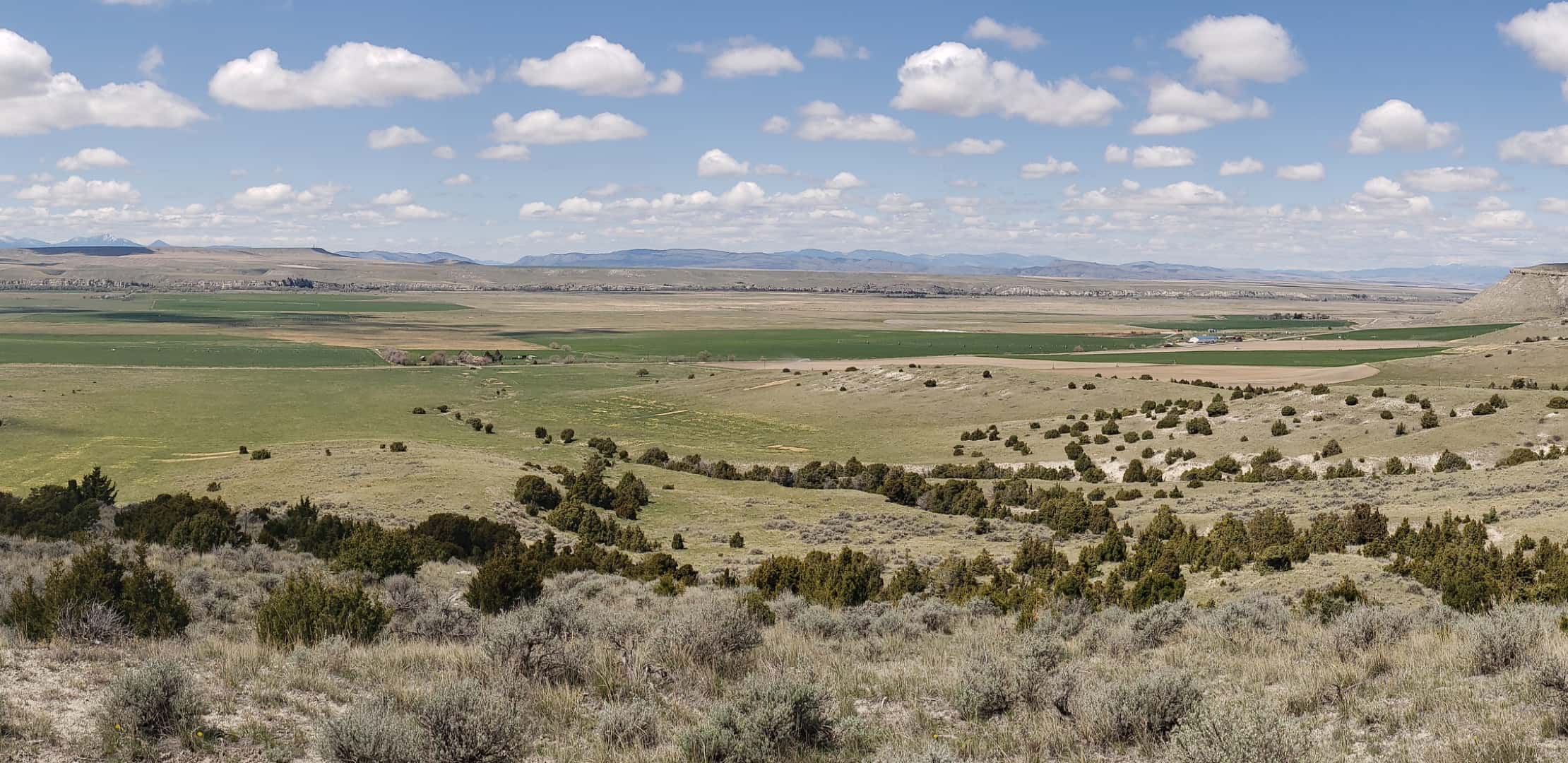
July runoff in the Missouri River Basin above Sioux City, Iowa, was 2.0 million acre-feet (MAF), 61% of average. Runoff was below-normal to well-below-normal in the Fort Peck, Garrison, and Oahe reaches due to lack of precipitation, dry soils, and below-average mountain snowpack. Runoff was above normal in the Fort Randall and Gavins Point reaches and near normal in the Sioux City reach.
“July brought warmer and drier weather to the Missouri River Basin,” said John Remus, chief of the U.S. Army Corps of Engineers’ Missouri River Basin Water Management Division. “The dry soil moisture, below-normal rainfall in the mountain regions, and below-normal mountain snowpack runoff have led to well below-average inflows into the reservoir system this summer.”
The 2026 calendar year runoff forecast for the Missouri River Basin above Sioux City, IA is 15.4 MAF, 60% of average and nearly the same as last month’s forecast. If realized, this forecast would be the 11th lowest runoff in the period of record.
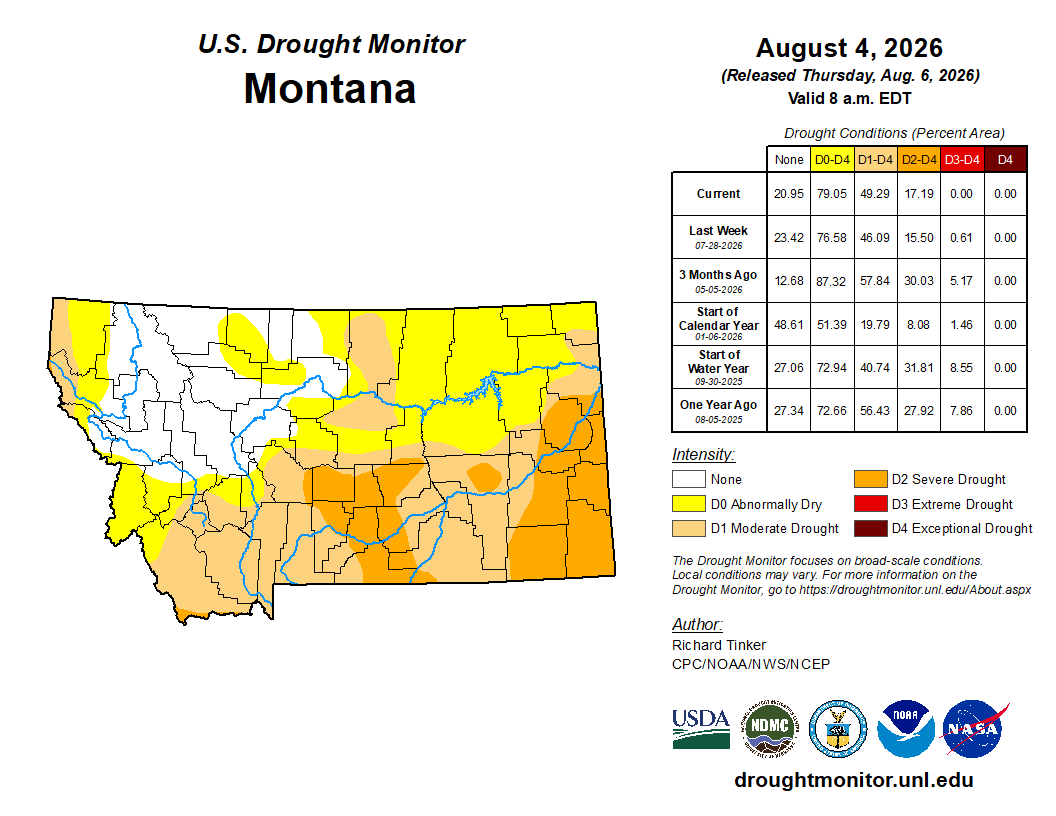
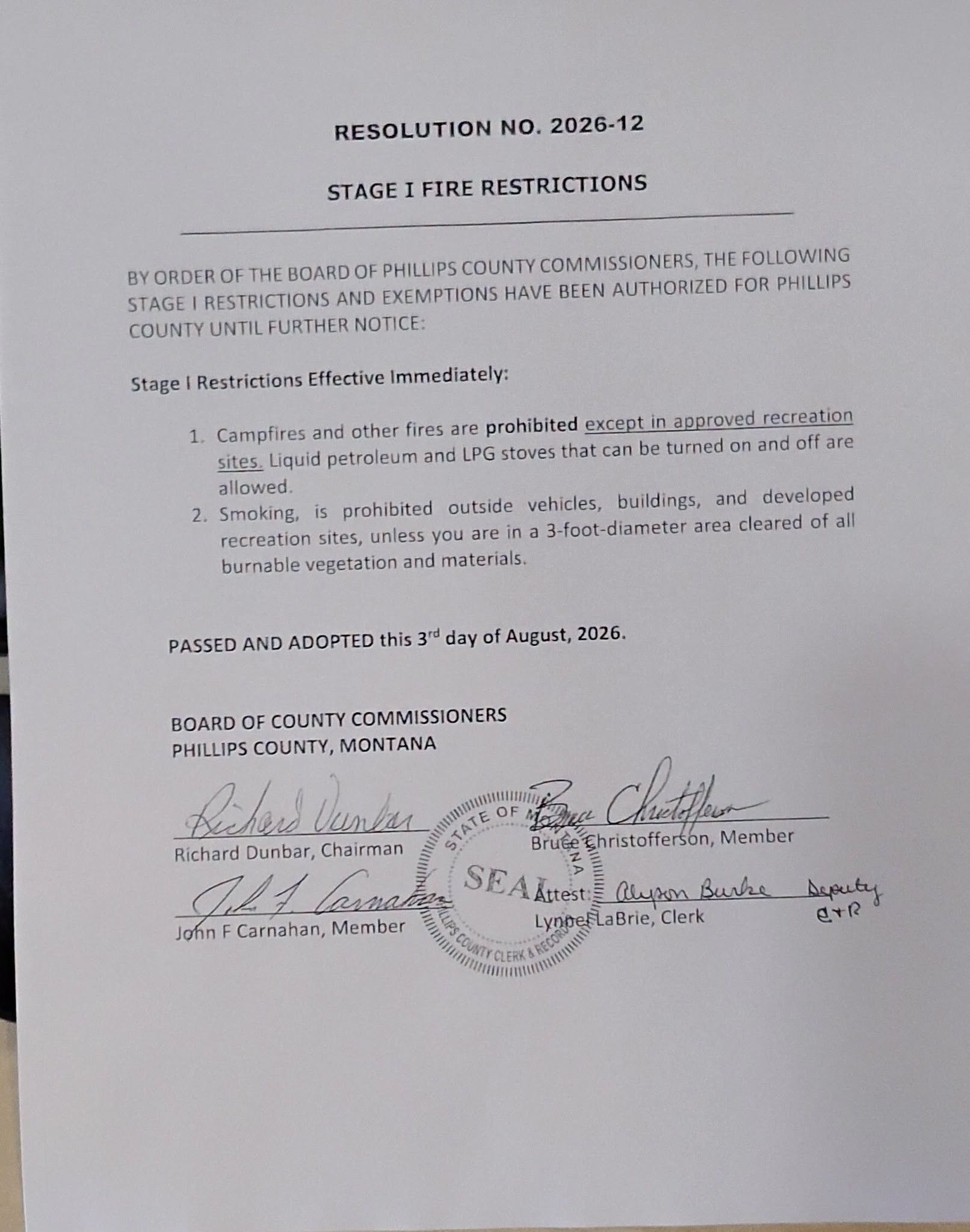
The U.S. Drought Monitor indicated 80% of the basin is still considered abnormally dry or in drought conditions. Drought conditions are expected to improve for much of Montana, Wyoming and Colorado by the end of October, but are likely to persist or expand in the Dakotas, Nebraska, and Iowa.
System storage on August 1 was 48.5 MAF, down 0.6 MAF since July 1 and 7.6 MAF below the base of the Annual Flood Control and Multiple Use zone. The monthly reservoir studies indicate System storage will continue to decline in the Carryover Multiple Use Zone during 2026. “The winter release from Gavins Point, which is based on the September 1 System storage check, will likely be at the minimum rate of 12,000 cfs (cubic feet per second),” added Remus.
Releases from Garrison Dam will be reduced from 18,000 cfs to 17,000 cfs on Aug. 9 to better balance storage in the upper three reservoirs. Fort Peck releases will remain at 7,000 cfs through September.
Basin and river conditions continue to be monitored, and System regulation will be adjusted based on the most up-to-date information.
Navigation:
Per the July 1 System storage check, navigation flow support will be at the minimum-service level through the end of the navigation season. The flow support season length will be shortened, ending November 15 at the mouth of the Missouri River. Gavins Point Dam releases are currently 28,000 cfs. Releases will be set to provide minimum-service flow support at all four target locations (Sioux City, Omaha, Nebraska City, and Kansas City).
Reservoir Forecasts:
- Gavins Point Dam
- Average releases past month – 25,700 cfs
- Current release rate – 28,000 cfs
- Forecast release rate – 28,500 cfs
- End-of-July reservoir level – 1206.7 feet
- Forecast end-of-August reservoir level – 1206.5 feet
- Notes: The Gavins Point release will be adjusted to provide navigation flow support on the lower Missouri River.
- Fort Randall Dam
- Average releases past month – 24,000 cfs
- End-of-July reservoir level – 1355.7 feet
- Forecast end-of-August reservoir level – 1354.9 feet
- Notes: Releases will be adjusted as necessary to maintain the desired reservoir elevation at Gavins Point and to back up Gavins Point releases.
- Big Bend Dam
- Average releases past month – 24,400 cfs
- Forecast average release rate – 26,900 cfs
- Forecast end-of-August reservoir level – 1420.8 feet
- Oahe Dam
- Average releases past month – 23,800 cfs
- Forecast average release rate – 27,300 cfs
- End-of-July reservoir level – 1596.0 feet (down 1.9 feet from June 30)
- Forecast end-of-August reservoir level – 1593.7 feet
- Garrison Dam
- Average releases past month – 18,000 cfs
- Current release rate – 18,000 cfs
- Forecast release rate – 17,200 cfs
- End-of-July reservoir level – 1827.4 feet (down 0.8 feet from June 30)
- Forecast end-of-August reservoir level – 1826.3 feet
- Notes – Releases will be reduced to 17,000 cfs on August 9 and held through mid-September.
- Fort Peck Dam
- Average releases past month – 6,800 cfs
- Current release rate – 7,000 cfs
- Forecast average release rate – 7,000 cfs
- End-of-July reservoir level – 2223.9 feet (no change from June 30)
- Forecast end-of-August reservoir level – 2223.3 feet
- Notes: Releases will be maintained at 7,000 cfs through September.
The forecast reservoir releases and elevations discussed above are not definitive. Additional precipitation, lack of precipitation or other circumstances could cause adjustments to the reservoir release rates.
Hydropower:
The six mainstem power plants generated 747 million kWh of electricity in July. Typical energy generation for July is 946 million kWh. The power plants are expected to generate 7.1 billion kWh this year, compared to the long-term average of 9.3 billion kWh.